I am an indifferent and somewhat uninterested player of Go. I find chess far more congenial, especially as I endow each piece with its own personality and goals. This technique almost invariably leads to defeat, since at least one of my bishops is named "Berkeley", and insists on that he is only a perception in God's (i. e.my) mind. To refute him, one of my rooks will go try to kick a pawn, and get swallowed up. There is merriment overhead, but it is very far away.
It's harder to imagine that the identical black rocks slowly being strangled by my opponent have individual volition, and so their deaths go unmourned. I know that Go is far more complex than chess, and that the elegance of this complexity arising from such simple rules is astounding. But my feeling is, if I wanted complexity I didn't understand, I'd go into tax law or study beetles. Anyway.
Proclus is far better than I, although I don't know what kind of practice he's had of late. He introduced my to the Go books of Cho Chikun (All About Life and Death), as well as the "Elementary Go Series", even lending me his copy of Vol. 7, Handicap Go, by Yoshiaki Nagahara and Richard Bozulich. Since that was six years ago, and I have it in front of me as I type this, I doubt he's getting it back. Both books are clear, logically, and extremely useful.
And what's the fun in that? Tax law and beetles, gentle reader. Fortunately, I stumbled across a Go book which fulfills my need for elaborately named strategems, while still providing a decent analysis of play. It's Ma Xiaochun's The Thirty-Six Stratagems Applied to Go. The 36 Stratagems are military maxims from ancient works. They have names like "Murder With a Borrowed Knife" and "Lead Away a Goat in Passing" and "The Cicada Sheds Its Skin" and "Make Friends With Distant Countries and Attack Your Neighbors" (one that China's been using for a while now) and "Point at the Mulberry to Curse the Locust Tree". Ma Xiaochun tries to show how they apply to the game of Go. I've always been skeptical of the claim that skill in Go translates into real strategic insight, but he makes a good (i.e. incomprehensible to me) case for it.
Couldn't find it on Amazon, so I guess it'll remain my secret weapon the next time Proclus and I sit down by a board. That is, I'll "Hide a Dagger with a Smile". Or possibly "Sacrifice Plums for Peaches". Maybe another reading is in order.
"Besiege Wei to Rescue Zhao"?
Thursday, September 15, 2005
Sunday, September 11, 2005
Four years ago I was in my dorm room, lying in bed and wondering if it was worth getting up. The janitor was talking to my neighbor outside my door, and I heard him say, "...flew a plane into the World Trade Center...." I got up to find out what he meant. Like a lot of people, I couldn't believe it at first.
We knew there were more planes, but not where. Nobody knew the scale of the damage, and even the World Trade Center planes we thought had killed about thirty thousand people.
The college held a meeting, to tell us what little they knew. It wasn't anything I hadn't learned online. Several people were crying, others clearly had been. On the way out a friend tried to talk at me and I snapped at her.
I don't know about anybody else, but prior to September 11th I didn't care about politics. It was a field fought over by idiots and con-men, and my only real political desire was not to have anybody tell me what to do. Suddenly, though, it mattered how we responded to this attack. I followed the news, developing opinions about what was going on. I began reading blogs.
"War is God's way of teaching Americans geography." Also history, religion, and, for lots of us, HTML. As a good liberal arts student, my reaction to the crisis was to check books out from the library. I read the Koran (as much of it as I could get through; its structure limits any satisfactory narrative), I read about the history of Islam and the modern actions which had led to the current structure of the Middle East. I started arguing with my classmates about what we should do next.
I don't know about anyone else, but I for one asked myself "Why do they hate us?" and found an answer. It just wasn't one any sane person would accept. Some of my classmates tried to argue that the victims of the attack were tacitly guilty, since they were participating in capitalism. As I recall, it was difficult not to hit them.
I didn't know what to do, then. I gave blood, like a lot of people, and donated some money. I studied Islam and the history of the Middle East. I tried to understand the people who flew planes into buildings full of innocents. I tried to understand the people who cheered when it happened, and the ones who made excuses for them.
I still don't know what to do.
So, where were you?
We knew there were more planes, but not where. Nobody knew the scale of the damage, and even the World Trade Center planes we thought had killed about thirty thousand people.
The college held a meeting, to tell us what little they knew. It wasn't anything I hadn't learned online. Several people were crying, others clearly had been. On the way out a friend tried to talk at me and I snapped at her.
I don't know about anybody else, but prior to September 11th I didn't care about politics. It was a field fought over by idiots and con-men, and my only real political desire was not to have anybody tell me what to do. Suddenly, though, it mattered how we responded to this attack. I followed the news, developing opinions about what was going on. I began reading blogs.
"War is God's way of teaching Americans geography." Also history, religion, and, for lots of us, HTML. As a good liberal arts student, my reaction to the crisis was to check books out from the library. I read the Koran (as much of it as I could get through; its structure limits any satisfactory narrative), I read about the history of Islam and the modern actions which had led to the current structure of the Middle East. I started arguing with my classmates about what we should do next.
I don't know about anyone else, but I for one asked myself "Why do they hate us?" and found an answer. It just wasn't one any sane person would accept. Some of my classmates tried to argue that the victims of the attack were tacitly guilty, since they were participating in capitalism. As I recall, it was difficult not to hit them.
I didn't know what to do, then. I gave blood, like a lot of people, and donated some money. I studied Islam and the history of the Middle East. I tried to understand the people who flew planes into buildings full of innocents. I tried to understand the people who cheered when it happened, and the ones who made excuses for them.
I still don't know what to do.
So, where were you?
I am so, so sorry.
Had we molluscs enough, and thyme
Carraway, honey, and dry white wine
These Roman sauces might thee move
To cook up cuttlefish with love.
For I shall simmer up some broth
And add the pepper, nothing loath,
And toss in, heedless of the price
Some celery seed and lovage nice.
And when the cuttlefish is done
'Tis split from paddle-tip to crown.
A mix of boiled brains, sans skin
With pepper, eggs, all pounded in
To bundle with some linen fine
(Which from my closet I'll unwind).
Fair-boiling stock is now its bath
Until the forcemeat is quite safe.
All these spices, herbs, and roots--
The finest wine, the tend'rest shoots:
I hope these condiments thee move
To cook up cuttlefish with love.
Very, very sorry.
Had we molluscs enough, and thyme
Carraway, honey, and dry white wine
These Roman sauces might thee move
To cook up cuttlefish with love.
For I shall simmer up some broth
And add the pepper, nothing loath,
And toss in, heedless of the price
Some celery seed and lovage nice.
And when the cuttlefish is done
'Tis split from paddle-tip to crown.
A mix of boiled brains, sans skin
With pepper, eggs, all pounded in
To bundle with some linen fine
(Which from my closet I'll unwind).
Fair-boiling stock is now its bath
Until the forcemeat is quite safe.
All these spices, herbs, and roots--
The finest wine, the tend'rest shoots:
I hope these condiments thee move
To cook up cuttlefish with love.
Very, very sorry.
Saturday, September 10, 2005
Category: things found searching for "kern baby".
Huntingdon Fidget Pie! "Bacon, onions and apples are the traditional filling and the pie was originally made round harvest time to feed the hungry workers."
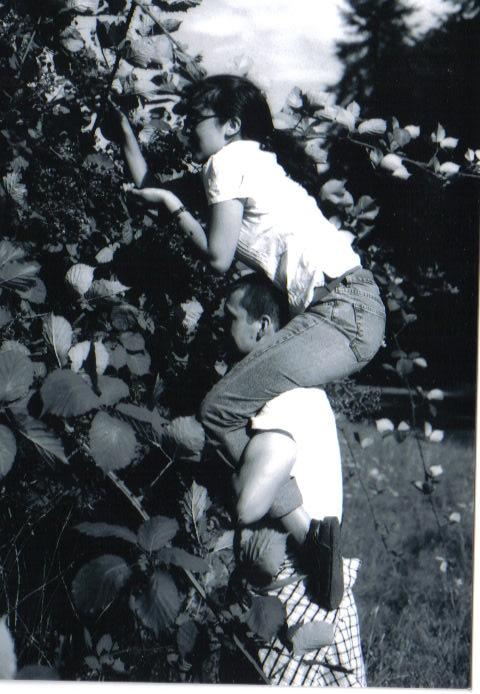
I like fall. Season of mists and mellow inebriety. The weather is cool enough that I reach work not covered in sweat but rather glowing with wholesome exercise. The trees are doing odd things with their leaves, which I do not understand but certainly enjoy. Apple trees are drooping affectionately, waiting for climbers to come up for the high fruit. Here in Oregon, the clouds are back. The whole thing makes me want to wrestle with friends or chase deer or pile straw bales one atop the other.
Huntingdon Fidget Pie! "Bacon, onions and apples are the traditional filling and the pie was originally made round harvest time to feed the hungry workers."
I like fall. Season of mists and mellow inebriety. The weather is cool enough that I reach work not covered in sweat but rather glowing with wholesome exercise. The trees are doing odd things with their leaves, which I do not understand but certainly enjoy. Apple trees are drooping affectionately, waiting for climbers to come up for the high fruit. Here in Oregon, the clouds are back. The whole thing makes me want to wrestle with friends or chase deer or pile straw bales one atop the other.
About the time of Tiberius there lived a man, named Apicius; very rich and luxurious, for whom several kinds of cheesecakes, called Apician, are named. He spent myriads of drachms on his belly, living chiefly at Minturae, a city of Campania, eating very expensive crawfish....--Athenaeus
I have acquired the crustaceavoracious gentleman's cookbook. Or rather, according to the introduction, a cookbook dedicated to him by an unknown compiler. After all, there were other Apicii. The most famous of them, also a gourmet, invented any number of dishes, endowed a culinary school, and killed himself when the money ran out. He most likely did not write the book either. Of the modern translator, I am please to say I know with certainty that he is Joseph Dommers Vehling. At least, his name is on the front cover.
The difficult of determining authorship does nothing to diminish the charm of this cookbook. My only complaint? The cheesecakes, alas, are not to be found within it.
I reproduce "Stuffed Sepia" below.
Pepper, Lovage, Celery Seed, Caraway, Honey, Broth, Wine, 'Basic Condiments'1. Heat [water], throw in the cuttlefish with Boiled Brains, the strings and skin removed, pound with Pepper, mix in Raw Eggs until it is plenty. Whole Pepper. Tie into little bundles [of linen] and immerse in the boiling stock pot until the forcemeat is properly cooked.I regret I cannot yet comment on the taste of this dish. Give me time, and cuttlefish!
1 Condimenta coctiva. The translator suggests "salt, herbs, roots", which I find unhelpful.
Thursday, September 08, 2005
Dear Mr. & Mrs. Odious,
I assume you're aware that you're living very much in volcano country? Actually, this 100-square-mile bulge doesn't sound terribly dangerous, just extremely cool. As I've mentioned to you before, one of the best scenic drives anywhere is from Springfield, OR over MacKenzie Pass to Sisters, with an instantaneous transition from temperate rain forest to arid lava fields as you cross the Cascades' rain shadow. Just about the only thing that could improve the trip would be a stretch of highway beside a bubbling, spitting lava cauldron, earnestly attempting to swallow the road. I do hope it happens in our lifetimes.
For something completely different, these optical illusions are quite astonishing, especially the third one. (Thank you, Brian Micklethwait.)
There's more of interest on the same site. This illusion doesn't influence me quite as strongly as promised, but it does bring to mind an optical illusion of which I suspect only river guides are aware. It's quite diverting when scouting a big rapid (while the other guides are telling lurid horror stories and the passengers in the inflatable kayaks are receiving their hopelessly nuanced and quite improbable instructions) to stare at one spot in the moving water, not shifting your gaze with the flow, but allowing the moving water continually to traverse your field of vision. After a time you look up at the canyon wall, and a whole band of stone seems to be melting away from its surroundings and oozing downstream. If you're scouting a Class V drop, you can get tree trunks to separate.
Tihs iullsoin sohuld fsacnitae phliloogsits.
And finally, have you ever wondered how hideous the Mona Lisa woud look with her mouth and eyes upside-down? Wonder no more.

Armstrong, regarding Mars:
We could go to Mars in ten years if we cared to. At present we have, I think rightly, other priorities. The question is whether we shall ever have a moment to take a deep breath, gather the necessary support, and begin the program.
And I think that it is vital that humanity go to Mars itself, rather than sending increasingly complex robots. An illusion, no matter how informative, is not reality. If we decide that watching Mars on TV is just the same as being there, walking on the red planet ourselves, we've lost all interest in the pursuit of truth--of experience as opposed to theory.
It's like trying to learn martial arts out of a book. You might have the motions right, but not understand their reasons. They are hollow, and any information we receive about Mars is hollow without real people there to explain it to us--a second hand experience, to be sure, but closer to reality than the images.
Only people can tell us the things that people would experience, and only people can place them into a narrative so that we can understand them. I have never been in a battle between Trojans and Greeks, but thanks to Homer I'm a lot closer to understanding that experience than I am to understanding what it means to be on Mars, efforts of Viking and Spirit notwithstanding.
UPDATE: Via Steve Bodio's blog, an Orion Magazine article on the same subject.
KUALA LUMPUR, Malaysia (AP)—Neil Armstrong said Tuesday that a manned mission to Mars will not happen for at least 20 years—but the effort might be easier than what it took to send him to the moon in 1969.He's quite right about that. What we lack right now is the will to go to Mars. Such a program is sure to be controversial, with lamentations for the money lost sending people to Mars--and what can people do that robots can't?--and how can we even think about messing up another planet the way we've messed up earth--and really we should fix all the problems we have here before going anywhere else.
The first man to walk on the moon noted that scientists must develop better onboard spacecraft technology and stronger protection shields from harmful space radiation before a manned flight to the Red Planet can be accomplished.
"It will certainly be 20 years or more before that happens," Armstrong said during a global leadership forum.
"It will be expensive, it will take a lot of energy and a complex spacecraft. But I suspect that even though the various questions are difficult and many, they are not as difficult and many as those we faced when we started the Apollo (space program) in 1961."
We could go to Mars in ten years if we cared to. At present we have, I think rightly, other priorities. The question is whether we shall ever have a moment to take a deep breath, gather the necessary support, and begin the program.
And I think that it is vital that humanity go to Mars itself, rather than sending increasingly complex robots. An illusion, no matter how informative, is not reality. If we decide that watching Mars on TV is just the same as being there, walking on the red planet ourselves, we've lost all interest in the pursuit of truth--of experience as opposed to theory.
It's like trying to learn martial arts out of a book. You might have the motions right, but not understand their reasons. They are hollow, and any information we receive about Mars is hollow without real people there to explain it to us--a second hand experience, to be sure, but closer to reality than the images.
Only people can tell us the things that people would experience, and only people can place them into a narrative so that we can understand them. I have never been in a battle between Trojans and Greeks, but thanks to Homer I'm a lot closer to understanding that experience than I am to understanding what it means to be on Mars, efforts of Viking and Spirit notwithstanding.
UPDATE: Via Steve Bodio's blog, an Orion Magazine article on the same subject.
Saturday, September 03, 2005
From Cronaca comes the story of the parasite cymothoa exigua.
The bug...was discovered inside the mouth of a red snapper bought from a London fishmonger.Also worth visiting is the page linked to at the bottom of the post, which has a much more disturbing picture.
The 3.5cm creature had grabbed onto the fish's tongue and slowly ate away at it until only a stub was left.
It then latched onto the stub and became the fish's "replacement tongue".
Now I know what to call those posts I never write. Christabels.
A Christabel, named after Coleridge’s poem, is an inherently unfinishable piece of writing. It is unfinishable because it is based on false premises (false premises often disguise themselves as grand and glorious ambitions) and you can spot a Christabel by the way it falls apart worse the further you go into it. There is no way of knowing for sure that you are writing a Christabel, because it is always theoretically possible that, had you gone on, perhaps the cat would have emerged from the depths of a particularly deeply meaningful bag. But if you can identify the increasing unlikeliness with any kind of objective judgement, it is a fairly clear sign worth taking a risk for. The risk of not having created the world’s greatest work of genius yet, that is. Not too bad, then. Worse things definitely happen at sea.
Friday, September 02, 2005
The lovely Ms. McArdle is offering pound cake for those who donate to the Red Cross. I'd like to do something similar. I don't bake, but I'll crochet a scarf for anyone who donates. E-mail me (sidebar!) if you'd like one, with color(s). Because I am not so great at crocheting, you can either have solid color or horizontal (short way) stripes of two colors.
Thursday, September 01, 2005
Wagner was an ass. This is news?
There is, however, something unconvincing in the portrayal of Friedrich Nietzsche as the innocent youth betrayed. Perhaps because my only real encounter with him is through his writings, I cannot myself imagine him over-awed or blinded by admiration for long. And so when Köhler insists that Nietzsche's remarks about the spirit "suddenly lost to us Germans through the arrogant behavior of the Jews" is merely the neophyte aping the master, I doubt. That Nietzsche's anti-Semitism was exaggerated by the Nazis I am sure. But that it existed, there seems to me no reason to doubt. If it is less spoken of in his later works, that is perhaps because he found more people to hate.
If, on one hand, you ever wanted to know what a swine Richard Wagner was, this is the book to tell you. It does so at length, in reliable detail, calmly, without prurience, perfectly backed with documentation, and in a translation whose only fault is in giving no Translator’s Notes for in-house German references. Joachim Köhler sustains his story with new ideas, revises other interpretations and modestly deconstructs Cosima née Liszt’s creation of “Richard Wagner Enterprises Inc”. (This she developed so far as to keep Parsifal exclusive to Bayreuth, prompting George Bernard Shaw to remark in 1889 that it “would almost reconcile me to the custom of suttee”!) Her tirelessly engineered public image of Wagner as a Titan – a Prometheus? an Atlas? – is countered by Köhler’s picture of him as his own successive operatic heroes: Tannhäuser, Lohengrin, the Dutchman, Tristan, Walther, Wotan, even Parsifal’s Saviour.I have Joachim Köhler's Nietzsche and Wagner: A Lesson in Subjugation. The gentleman (Köhler, since neither of the men in the title of the work may accurately be so identified) has great sympathy for the young Nietzsche (who, incidentally, bears an eerie resemblance to someone I know ( I make no claims as to the content of the "eerie resemblance" site, by the way. Just a Google image search)). As well one might: Wagner's overbearing insistence on hero-worship from all around him, along with his rather underhanded dealings with the fairer sex, are presented in all their squalor.
If, on the other hand, you ever wanted to know how it was that the same Richard Wagner created some of the most ravishing and marvellous music ever composed, how he achieved in his gigantic compositions, note by note, bar by bar, some of the biggest single projects of the imagination ever achieved by any human being in any field of endeavour, then you will not quite find the answer here. The book’s limitations in this respect are not exceptional, being second nature to most studies of composers, particularly now that music study is to music as Classical Studies are to Latin. I had three particular doubts as I read Köhler’s interpretation of the life and works, and the first has to do with the swinishness.
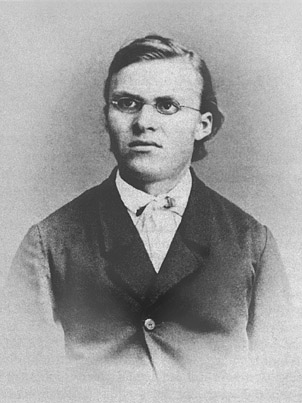
There is, however, something unconvincing in the portrayal of Friedrich Nietzsche as the innocent youth betrayed. Perhaps because my only real encounter with him is through his writings, I cannot myself imagine him over-awed or blinded by admiration for long. And so when Köhler insists that Nietzsche's remarks about the spirit "suddenly lost to us Germans through the arrogant behavior of the Jews" is merely the neophyte aping the master, I doubt. That Nietzsche's anti-Semitism was exaggerated by the Nazis I am sure. But that it existed, there seems to me no reason to doubt. If it is less spoken of in his later works, that is perhaps because he found more people to hate.
Also re: Katrina. Everybody who yammers about "God striking down the wicked" with this storm needs to establish some evidence. Did an angel appear to the one righteous man in New Orleans and declare that the city would be destroyed? If this wind is the fruit of Allah's planning, has He come forward to take credit for it? If not, shut the hell up. Sin does not always bring on disaster, and disaster does not always indicate sin. Demonstrate formal or efficient causality, or pipe down.
To declare this hurricane to be some punishment for evil is to underestimate God and man. If your faith is tested (as it should be) by tragedies like Katrina, the answer is not to take the easy way out and declare that "they deserved it". God kills men, women, and children every day. It is our task to try to reconcile that with the idea of a just and loving God.
And that doesn't mean we aren't angry at Him.
UPDATE: Edited for language, now that I am somewhat cooler.
To declare this hurricane to be some punishment for evil is to underestimate God and man. If your faith is tested (as it should be) by tragedies like Katrina, the answer is not to take the easy way out and declare that "they deserved it". God kills men, women, and children every day. It is our task to try to reconcile that with the idea of a just and loving God.
And that doesn't mean we aren't angry at Him.
UPDATE: Edited for language, now that I am somewhat cooler.
There's a link to the American Red Cross at the sidebar, just like the one in this post. May I suggest donating to help the victims of Katrina?
Sunday, August 28, 2005
Damn straight:
If a customer never says “Please” or “thank you” during the course of the meal you’re getting 15% or less.
If the customer says “You’re the best waiter I’ve ever had” – your tip is sure to be shit.
A customer who smells the cork is an amateur.
Serve Decaf – to everybody.
Never shortchange the bus people when you tip out.
Coke head waiters work their entire shift. The Potheads always want to leave early. The Crackheads bolt as soon as they get their first cash tip.
Monday, August 22, 2005
Nature is always stranger than you think:
The snapping shrimp (Alpheus heterochaelis) produces a loud snapping sound by an extremely rapid closure of its snapper claw. It was commonly believed that the sound is generated when the two claw surfaces hit each other. We show that the sound, in fact, originates from the collapse of a cavitation bubble. During the rapid snapper claw closure a high-velocity water jet is emitted from the claw with a speed exceeding cavitation conditions. Hydrophone measurements in conjunction with time-controlled high-speed imaging of claw closure demonstrate that the sound is emitted at the cavitation bubble collapse. A model for the bubble dynamics based on a Rayleigh-Plesset type equation quantitatively accounts for the time dependence of the bubble radius and for the emitted sound."Shrimpoluminescence"?
We now also report that a short, intense flash of light is emitted as the bubble collapses, indicating that extreme pressures and temperatures of at least 5,000 K must exist inside the bubble at the point of collapse. We have dubbed this phenomenon 'shrimpoluminescence' — the first observation, to our knowledge, of this mode of light production in any animal — because of its apparent similarity to sonoluminescence, the light emission from a bubble periodically driven by ultrasound.
Do you want to behold the strange and lurid art of a culture bizarre almost beyond imagination? Take a look at James Lileks' Bureau of Corporate Allegory: engravings from old stock certificates!
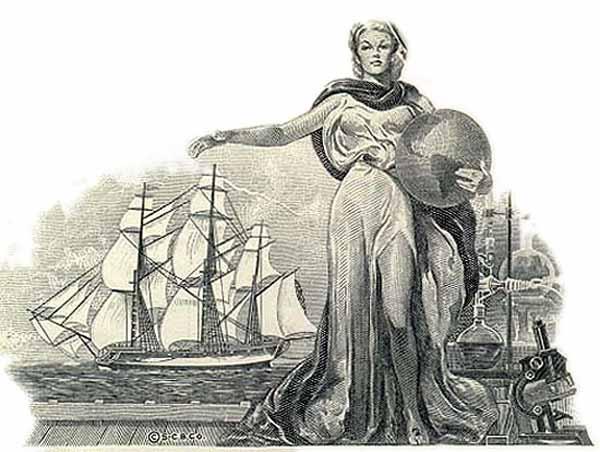 Note the stigmatum on her left foot. Whatever will future archaeologists conclude?
Sunday, August 21, 2005
Iconoclast terrorists. Those who can't build, tear down.
Via Cronaca.
The Colosseum in Rome is to be cordoned off to the public behind metal barriers as Italy moves to protect its cultural heritage from the threat of terrorism.I wish the Italians luck in defending their heritage and their lives. Italy seems to me to be a likely target for the next bombing. I'm glad this conclusion has not escaped the people who can do something to prevent it.
Heightened security at the 2,000-year-old amphitheatre is among a number of preventive measures being implemented across the country after last month's terror attacks in London.
Via Cronaca.
Saturday, August 20, 2005
Also, here are some fun toys for fellow geomorphology and orometry enthusiasts:
Virtual Earth allows you to zoom in on a map of the U.S. until the map turns to aerial photos. You can zoom in to an impressive level of detail, enough to distinguish individual trees. You can even, if your curiosity inclines this way, see photos of Nevada's Area 51.
If you happen to have some old 3-D glasses lying around, take a look at the USGS' 3D-formatted photos of Lodore Canyon, including many shots from Powell's 1871 expedition. The parent site has 3-D images of many other national parks.
And if you're really obsessive about this kind of stuff, you might enjoy these writings on prominence theory and the mathematics of orometry. Prominence, if you're wondering, is a method of measuring a mountain's size and regional importance independent of its absolute elevation. Imagine it thus: picture sea level beginning to rise around your favorite mountain. At some point, the water would cut off your mountain's land connection to any higher peaks. It would then be the highest peak on its own island, and its height above that imaginary sea level is its prominence. Enjoy!
Headline of the day: "Lava sledding is one tough sport."
You bet your ass it is!
Someone once told me that the many vertical gouges one sees adorning the fall-lines on the blasted shale mounds on the Navajo reservation north of Flagstaff are the result of similar recreation. I hope it's true. It would certainly be an excellent way not to grow up a whiner, taking high-speed, face-first diggers into the Chinle Formation, picking shards of petrified mud out of eyes and teeth, and cheerfully sprinting back for more.

Sledding anyone?
Rightly thinking that it was the sort of thing which would intrigue me, Peculiar sent me this:
My brain kept me up at night worrying at it. I keep wanting to make little bits of it make sense, but without getting at least a stanza, I can't get any sense of what's going on. Cerdis zerom: Sur dix héroes? One commentator at languagehat suggests "Ceux d'Izere on diront tous lapins y est".
It doesn't help that the mathematical portion of my mind keeping telling me to analyse it according to the occurence of phonemes.
POEME EN LANGUE INCONNUE.From languagehat.
Cerdis zerom deronty toulpinye,
Purois harlins linor orifieux,
Tictic falo mien estolieux,
Eulfiditons lafar relonglotye.
Gerefeluz tourdom redassinye;
Ervidion tecar doludrieux,
Gesdoliou nerset bacincieux,
Arlas destol osart lurafirie.
Tast derurly tast qu'ent derontrian,
Tast deportulast fal min adian,
Tast tast causus renula dulpissoitre,
Ladimirail reledra survioux,
C'est mon secret ma Mignonne aux yeux doux,
Qu'autre que toy ne sauroit reconnoistre.
—Marc Papillon, seigneur de Lasphrise (1597)
My brain kept me up at night worrying at it. I keep wanting to make little bits of it make sense, but without getting at least a stanza, I can't get any sense of what's going on. Cerdis zerom: Sur dix héroes? One commentator at languagehat suggests "Ceux d'Izere on diront tous lapins y est".
It doesn't help that the mathematical portion of my mind keeping telling me to analyse it according to the occurence of phonemes.
Friday, August 19, 2005
Lacking anything spectacular of my own, I can't resist sharing some amazing shots of the Four Girls Mountains (Siguniang) Nature Preserve in Sichuan. The photographer is Kenzo Okawa. Bravo!



Harry Potter and the Half-Blood Poet.
JUNE is the cruellest month, breedingVia Eve Tushnet.
Voldemort out of the dead land, mixing
Crucio and Imperius, stirring
Harry to behave like a prat.
What's that term? Oh yeah: heh.
Honesty is not a quality often found in debates regarding conservation. Any number of "facts" have been published by both sides, and it takes a bit of searching to determine which are absurd. If everyone would just stop lying, we could get a lot more done. But the short-term gains from mendacity apparently overshadow the long-term gains of reputation.
I like wind power. It's as close to free as one gets, and if it's not horribly noisy or "kill[ing] birds in an avian frappe", I'm all for it. While I don't believe that it will ever serve as a primary source of energy, that doesn't mean that it can't help out where appropriate. Apparently for some people, "appropriate" means "in someone else's yard".
I am also perfectly happy to trade houses with Sen. Kennedy.
Honesty is not a quality often found in debates regarding conservation. Any number of "facts" have been published by both sides, and it takes a bit of searching to determine which are absurd. If everyone would just stop lying, we could get a lot more done. But the short-term gains from mendacity apparently overshadow the long-term gains of reputation.
I like wind power. It's as close to free as one gets, and if it's not horribly noisy or "kill[ing] birds in an avian frappe", I'm all for it. While I don't believe that it will ever serve as a primary source of energy, that doesn't mean that it can't help out where appropriate. Apparently for some people, "appropriate" means "in someone else's yard".
I am also perfectly happy to trade houses with Sen. Kennedy.
Parallels between terrorism and piracy.
What is needed now is a framework for an international crime of terrorism. The framework should be incorporated into the U.N. Convention on Terrorism and should call for including the crime in domestic criminal law and perhaps the jurisdiction of the International Criminal Court. This framework must recognize the unique threat that terrorists pose to nation-states, yet not grant them the legitimacy accorded to belligerent states. It must provide the foundation for a law that criminalizes not only terrorist acts but membership in a terrorist organization. It must define methods of punishment.It's always nice to have a new model to consider when dealing with a problem as intractable as terrorism. The "war" paradigm is simplistic and easily criticized, that of "law enforcement" toothless. I think the author neglects the special motivations of terrorists, but dealing with them as pirates were dealt with has a certain charm:
Coming up with such a framework would perhaps seem impossible, except that one already exists. Dusty and anachronistic, perhaps, but viable all the same. More than 2,000 years ago, Marcus Tullius Cicero defined pirates in Roman law as hostis humani generis, "enemies of the human race." From that day until now, pirates have held a unique status in the law as international criminals subject to universal jurisdiction—meaning that they may be captured wherever they are found, by any person who finds them. The ongoing war against pirates is the only known example of state vs. nonstate conflict until the advent of the war on terror, and its history is long and notable. More important, there are enormous potential benefits of applying this legal definition to contemporary terrorism.
The gallows was a simple structure of two wooden uprights joined at the top by a crossbeam. A ladder was leaned against the gallows, and the rope with the hangman's noose was suspended from the beam. The pirate was helped up the ladder by the executioner, the noose was placed around his neck, and when the Marshal gave the signal, the executioner pushed him off into space.--Under the Black Flag, David Cordingly
Thursday, August 18, 2005
So you wanna build a rocket?
Take that warning about "horribly simplistic" equations seriously. A brief bounce about the site tells me that you're not going to want to plan your trip to Alpha Centauri without a little more research. Not to disparage the site, which is excellent. Or Alpha Centauri, which I hear is nice.
Take that warning about "horribly simplistic" equations seriously. A brief bounce about the site tells me that you're not going to want to plan your trip to Alpha Centauri without a little more research. Not to disparage the site, which is excellent. Or Alpha Centauri, which I hear is nice.
Wednesday, August 17, 2005
Actually, I am a dualist. I just don't discount matter because it isn't form. Gnosticism is the place to shop for that particular error.
This is all tangential to the original post, which is much more interesting.
I don't know (I do, really; it's is just an idiom) how the "ghost in the machine" type of dualism achieved such prominence. It's easily refuted, silly, and egregiously wrong. But I, at least, am a dualist, so far as I understand the stance. I believe in matter, and form.
This belief makes my life easier in lots of ways. For example, I can say that a waterfall, or a river, or a person, is always the same waterfall or river or person, without having to worry about them changing, or even whether they possess any of the same bits of matter as they did when I last dealt with them. I assume that they each possess substance, to which various accidents happen, and that that substance has an eternal form. And while I believe that the form continues even after the matter passes away, I don't believe that the soul is complete without a body. Heaven is not populated with ghosts, and the angels are not airy beings, whatever Milton may have thought.
On a very slightly related point, I've seen E Prime suggested as a cure for semantic confusion. To me, the cure seems worse than the disease. While it's nice, every now and then, to be reminded that existence is not a predicate, simply removing the verb "to be" does not advance the argument. Some things are, even in the limited sense the gentleman argues against: they are permanent, unchanging, and always true. Two plus two is four; God is love; the Twins are the greatest team to root for in the history of baseball. Two a priori synthetics and one a posteriori.
Also, and I apologize if this is too flippant, since I do find iconoclasm an abhorrent heresy:
The ICONOCLASTS go smashing
With hammer, pick, and iron bar,
The genitals that bronze is flashing,
Heedless of what art they mar.
This is all tangential to the original post, which is much more interesting.
I don't know (I do, really; it's is just an idiom) how the "ghost in the machine" type of dualism achieved such prominence. It's easily refuted, silly, and egregiously wrong. But I, at least, am a dualist, so far as I understand the stance. I believe in matter, and form.
This belief makes my life easier in lots of ways. For example, I can say that a waterfall, or a river, or a person, is always the same waterfall or river or person, without having to worry about them changing, or even whether they possess any of the same bits of matter as they did when I last dealt with them. I assume that they each possess substance, to which various accidents happen, and that that substance has an eternal form. And while I believe that the form continues even after the matter passes away, I don't believe that the soul is complete without a body. Heaven is not populated with ghosts, and the angels are not airy beings, whatever Milton may have thought.
On a very slightly related point, I've seen E Prime suggested as a cure for semantic confusion. To me, the cure seems worse than the disease. While it's nice, every now and then, to be reminded that existence is not a predicate, simply removing the verb "to be" does not advance the argument. Some things are, even in the limited sense the gentleman argues against: they are permanent, unchanging, and always true. Two plus two is four; God is love; the Twins are the greatest team to root for in the history of baseball. Two a priori synthetics and one a posteriori.
Also, and I apologize if this is too flippant, since I do find iconoclasm an abhorrent heresy:
The ICONOCLASTS go smashing
With hammer, pick, and iron bar,
The genitals that bronze is flashing,
Heedless of what art they mar.
Trojan gold?
Archeologists working a dig in central Bulgaria have unearthed some 15,000 miniature rings and other gold ornaments that date to the end of the third millennium BC - a find they say matches the famous treasure of Troy, scholars announced Wednesday.
"Documents and photographs leaked to ITV News also confirmed that Mr de Menezes did not run from the police, as had been reported, had used his Tube pass to enter the station, rather than vault the barrier, and had taken a seat on the train before being grabbed by an officer."
I don't understand how this happened. Were the officers jumpy due to the other bombings? If so, why shoot him once he was restrained? At first I felt that this killing was a tragic mistake, but that if you're going to run from the police, jump the barrier, &c., you take your chances. But now I can think of no explanation except the irrational.
UPDATE: I realize that "irrational" seems a little bland. But to me it means that the policemen responsible were not people. Racism, should that prove to be their motive, is irrational; being overcome by fear, for oneself or others, makes one irrational. And irrational beings must be controlled by others. That is to say, that these officers should go to jail for a long, long time, should these latest findings prove correct.
That this behavior should appear in the ranks of those chosen to protect the people is distressing. That it should cost Mr de Menezes his life is tragic.
I don't understand how this happened. Were the officers jumpy due to the other bombings? If so, why shoot him once he was restrained? At first I felt that this killing was a tragic mistake, but that if you're going to run from the police, jump the barrier, &c., you take your chances. But now I can think of no explanation except the irrational.
UPDATE: I realize that "irrational" seems a little bland. But to me it means that the policemen responsible were not people. Racism, should that prove to be their motive, is irrational; being overcome by fear, for oneself or others, makes one irrational. And irrational beings must be controlled by others. That is to say, that these officers should go to jail for a long, long time, should these latest findings prove correct.
That this behavior should appear in the ranks of those chosen to protect the people is distressing. That it should cost Mr de Menezes his life is tragic.
Wednesday, August 10, 2005
We're not dualists:
I posted the following as a comment to Chas Clifton's post on Early Christians' attacks on Pagan art:
Dear Chas,
Just a note on the Abrahamic religions' hostility to art: its worth noting that traditional Christianity stands out as the one member of this group in which such a priori hostility is emphatically not present. It took a seventh Ecumenical Council and well over a century of nasty conflict with the Iconoclast heretics to decide the subject. Eastern Orthodox teaching maintains that to deny the possibility of representing spiritual truth in material symbols is to miss out on the full import of Christ's Incarnation. God took on a material body so that we who are also formed of matter may know Him and be united with Him. Renowned Iconodule St. John of Damascus wrote: "I do not worship matter but I worship the creator of matter, who for my sake became material and deigned to dwell in matter... I will not cease from worshipping the matter through which my salvation has been effected." That's why Orthodox churches are full to the gills of paintings, and it's why we use material things-- bread, wine, oil, water, wedding rings, crowns-- in our sacraments. They're not just symbols, but rather matter deified through the Creator's presence within His creation.
It's a joyous and celebratory theology which the Western churches have unfortunately been missing out on for quite a while now; many sects took it a very sad extreme, e.g. the Calvinist iconoclasts destroying Christian art in Scotland. Archbishop Kallistos Ware explains it thus:
"[The Iconoclasts] fell, as so many puritans have done, into a kind of dualism. regarding matter as a defilement, they wanted a religion freed from all contact with what is material; for they thought that what is spiritual must be non-material. But that is to betray the Incarnation, by allowing no place to Christ's humanity, to His body; it is to forget that our body as well as our soul must be saved and transfigured."We're not dualists, however much most Christians have neglected and forgotten the point. C.S. Lewis remembered, though. I love his blunt and to the point remark: "God likes matter. He made quite a lot of it."
Update: It's an interesting side note that the Roman Catholic church held on to sculpture as a religious art form, while the Orthodox almost completely abandoned it. What might be at stake here theologically, I have no idea. But Catholic art since the Renaissance (much of which, let me hasten to add, I love) definitely embraced a more Pagan aesthetic, while Orthodox icons maintained their otherworldly and non-representational style.
Sunday, August 07, 2005
Ways to Avoid Vomiting on the Way to Work.
1) Limit intake of ipecacuanha.
2) Do not consider the "but I'm a priestess sworn to chastity" scene in Troy.
3) Do not get distracted by a discussion of zombie invasion surival tactics while drinking petite syrah to overcome flu-like symptoms (feed a fever, drown the 'flu), look at the clock, indulge in profanity, note that to reach work on time one must achieve a personal best for the three mile run that one set in a previous millenium, meditate on the nature of this Kierkegaardian either/or (stupid red wine), and decide to go for it rather than taking the obvious step of calling ahead to let them know one will be ten--better make it fifteen--minutes late.
1) Limit intake of ipecacuanha.
2) Do not consider the "but I'm a priestess sworn to chastity" scene in Troy.
3) Do not get distracted by a discussion of zombie invasion surival tactics while drinking petite syrah to overcome flu-like symptoms (feed a fever, drown the 'flu), look at the clock, indulge in profanity, note that to reach work on time one must achieve a personal best for the three mile run that one set in a previous millenium, meditate on the nature of this Kierkegaardian either/or (stupid red wine), and decide to go for it rather than taking the obvious step of calling ahead to let them know one will be ten--better make it fifteen--minutes late.
Category: Time, Wasting of; Wastrels; Waste; Killing of. The Tree of Life website, which I stumbled across rather by accident but am sure is better known to the reading public, will suck away your afternoon.
Each page contains information about a particular group of organisms (e.g., echinoderms, tyrannosaurs, phlox flowers, cephalopods, club fungi, or the salamanderfish of Western Australia). ToL pages are linked one to another hierarchically, in the form of the evolutionary tree of life. Starting with the root of all Life on Earth and moving out along diverging branches to individual species, the structure of the ToL project thus illustrates the genetic connections between all living things.That line about the "root of all Life on Earth" had me worried that they were rather overconfident; fortunately, the complexity of that question is honored:
The rooting of the Tree of Life, and the relationships of the major lineages, are controversial. The monophyly of Archaea is uncertain, and recent evidence for ancient lateral transfers of genes indicates that a highly complex model is needed to adequately represent the phylogenetic relationships among the major lineages of Life.Cool.
When you eliminate all but material concerns from a society, health becomes the only morality. Even when you have other motives.
Sunday morning. I am not hungover, and anyway not nearly as badly as you are, you dirty dog. But I am sick, which has much the same feeling to it, only without having had any fun, first. I thought I would make a list, inspired by the Corner, of movies which I consider excellent hangover recovery vehicles.
10. Every Which Way But Loose. I loathe this movie. Its only redeeming feature is that the camera work is relatively steady, excepting the fight scenes, which keeps one's equilibrium in whack. It is also commonly shown between noon and 2:00 pm, which means that just as one has recovered basic motor skills, one can reassure oneself that at least one is not co-starring with an orang-utan.
9. Ghostbusters. This would be higher on my list, but I really like it. Which means that I try to pay attention when it's on, which is not a good quality for a hangover movie to possess. Distraction from wretchedness, yes. But said wretchedness only increases with the realization that one can only focus on objects for thirty seconds before everything starts blurring and wobbling.
8. Diggstown. Classic hangover fare. The fights are fun, the acting bad, and the premise absurd. For me, this takes the place of Road House, since Patrick Swayze is not someone I like to watch even when I'm sober.
7. Big Trouble in Little China. Kurt Russell, whence camest thou? From the darkest days of Disney's frantic fare, now to star in this, our campy genre-less film. Escapist is good.
6. True Grit. Another genuinely enjoyable movie, with Oscars for various movie-related things. Rooster Cogburn will make you think last night's indulgences were a drop in his ocean. And by the time he says, "Fill your hands, you son-of-a-bitch!", you're feeling a heckuva a lot better.
5. Fistful of Dollars. Clint Eastwood looks like you probably feel. But he gets to shoot people. I'd have put Yojimbo here, but like you're really going to read subtitles. You're a disgrace, you know that?
4. The Man From Snowy River. Horses. Australia. A love interest that couldn't act her way out of a paper bag if the instructions were on the heel. And the greatest riding scene in any movie, ever.
3. The Last Starfighter. The 80's were a fertile time for hangover movies. The Last Starfighter is classic teenage wish fulfillment sci-fi. Good for it. You'll wish you had a spaceship, or at least a Thumb.
2. Top Gun. Loud, which is bad. But fast jets, which is good! But Goose dies (sorry!), which is bad. But Maverick gets to be a pilot, which is good! This movie requires no thought to enjoy, which is good, good, good.
1. Omega Man! Oh, the joy of Omega Man. Just when you're wishing that all human life had been wiped out, along comes this movie and IT'S LIKE THEY READ YOUR MIND. Sorry. Didn't mean to shout. But Charleton Heston running around a post-Apocalyptic urban wasteland, killing off mutants and trying to stay sane: that's what you need right now. ALong with salt. And water. And protein. And less movement.
Comments are open; suggestions appreciated.
10. Every Which Way But Loose. I loathe this movie. Its only redeeming feature is that the camera work is relatively steady, excepting the fight scenes, which keeps one's equilibrium in whack. It is also commonly shown between noon and 2:00 pm, which means that just as one has recovered basic motor skills, one can reassure oneself that at least one is not co-starring with an orang-utan.
9. Ghostbusters. This would be higher on my list, but I really like it. Which means that I try to pay attention when it's on, which is not a good quality for a hangover movie to possess. Distraction from wretchedness, yes. But said wretchedness only increases with the realization that one can only focus on objects for thirty seconds before everything starts blurring and wobbling.
8. Diggstown. Classic hangover fare. The fights are fun, the acting bad, and the premise absurd. For me, this takes the place of Road House, since Patrick Swayze is not someone I like to watch even when I'm sober.
7. Big Trouble in Little China. Kurt Russell, whence camest thou? From the darkest days of Disney's frantic fare, now to star in this, our campy genre-less film. Escapist is good.
6. True Grit. Another genuinely enjoyable movie, with Oscars for various movie-related things. Rooster Cogburn will make you think last night's indulgences were a drop in his ocean. And by the time he says, "Fill your hands, you son-of-a-bitch!", you're feeling a heckuva a lot better.
5. Fistful of Dollars. Clint Eastwood looks like you probably feel. But he gets to shoot people. I'd have put Yojimbo here, but like you're really going to read subtitles. You're a disgrace, you know that?
4. The Man From Snowy River. Horses. Australia. A love interest that couldn't act her way out of a paper bag if the instructions were on the heel. And the greatest riding scene in any movie, ever.
3. The Last Starfighter. The 80's were a fertile time for hangover movies. The Last Starfighter is classic teenage wish fulfillment sci-fi. Good for it. You'll wish you had a spaceship, or at least a Thumb.
2. Top Gun. Loud, which is bad. But fast jets, which is good! But Goose dies (sorry!), which is bad. But Maverick gets to be a pilot, which is good! This movie requires no thought to enjoy, which is good, good, good.
1. Omega Man! Oh, the joy of Omega Man. Just when you're wishing that all human life had been wiped out, along comes this movie and IT'S LIKE THEY READ YOUR MIND. Sorry. Didn't mean to shout. But Charleton Heston running around a post-Apocalyptic urban wasteland, killing off mutants and trying to stay sane: that's what you need right now. ALong with salt. And water. And protein. And less movement.
Comments are open; suggestions appreciated.
Xenophon's Symposium, cont.
Earlier attempts:
Part 2
Part 1
Those more remote dined in silence, as though ordered to do so by a superior.A short bit this time, since I'm a little lazier than usual. Phillipos will be sketched out a bit more in later paragraphs. The word I've translated as "fool" is literally "laugh-maker", and I considered "jester" or "comedian". But "jester" makes me imagine him in a floppy hat with bells, and "comedian" connects him with Greek comedies, which is inappropriate. His entrance here is typical of him. We'll see in a bit how Socrates deals with a fellow like Phillipos.
Phillipos the fool knocked on the door, and he told the doorman to announce who he was and that as for food he had all sorts--of an appetite for someone else's, and that his slave, he continued, was bent over with his burden--an empty stomach, and no breakfast, either.
Kallias, hearing this, said, "At any rate, gentlemen, to refuse him a roof would be shameful; so let him in." And he gazed at Autolycos, clearly to see what he thought of this pleasantry.
Earlier attempts:
Part 2
Part 1
Friday, August 05, 2005
Thursday, August 04, 2005
Anecdote disguised as thoughts on martial arts training. I was once told that the pecking order of a schoolyard is set by the fourth grade. My own experience confirms this. With allowance for jostling once puberty, with its burden of muscle and hormones, hits, no one really "fought" after age eleven or so. The school I attended was K-12, and so such sovereignty as was to be gained had already been distributed by the time we could have done serious damage. We knew who was tougher than whom, and managed things accordingly.
This happy--or at least pacific--state was not true of the summer camp I disappeared to for three weeks every year. At age thirteen, some of us were starting to put on serious muscle mass, while others remained undersized. I don't believe I need to tell you which group I belonged to. But because of my experience on the school yard as a small(er) fry, I tended to uncomprehendingly offend. My image of myself was one of a fellow who could deal with anyone who wanted to step up, and although I never went out of my way to cause trouble, I didn't avoid it, either. I was at least six inches taller and thirty pounds heavier in my head than outside it.
One night, when the counselors were off smoking (what, I cannot tell), we the campers were rough housing in the cabin. I played rough, another fellow played rough, words were exchanged, and we ended up facing off, before an audience of our peers.
My opponent had gotten his growth spurt, and was well over my height and weight. I had no formal training, and my basic tactics until tonight (in the rare occasions that things went beyond harsh words) had been to close, grab the other fellow, and squeeze him until he peed his pants. Hey, it worked great when I was nine; and in recent years I've found myself viewing it as more and more viable. But it was clearly not going to work on my friend across the room.
While I was considering what I'd gotten myself into, he opened the dance with a haymaker which took me in the side of the head. I honestly don't know if he hit with his fist or an open hand, but the room started spinning and my vision was full of phosphenes and narrowed almost to non-existence. I'm told I just shook my head and grunted, which everyone thought was a sign that I wasn't hurt. In fact it was visceral shock at being hit, coupled with a strange lack of belief in that punch's reality (pain came the next morning, along with a pretty good shiner). Whichever it was, it came off as toughness, and made my opponent reconsider his plan to attack at range. He charged.
People charge poorly, especially untrained thirteen year old boys. If I'd had my wits about me I'd have crushed his nose with an uppercut when he came at me (as an untrained tactic. My response these days would be a little different). Instead he hit me hard in the chest with his shoulder and ended up with his head under my right arm, trying to football tackle me.
At the time I held two competing beliefs about fighting. First, that it was important to fight fairly, which mean no kicking, biting, &c. Second, that I really ought to win. It was the second impulse that led me to drive my knee into his stomach while I kept his head in my guillotine (backwards headlock, for those who hate lingo). The first knee was accompanied by a reply of "Whuff," from my assailant and a sudden limpness; after the fifth I let him fall down and throw up on the floor. When he seemed to have finished, I gave him a hand up (the belief in fighting fairly winning out once the actual fight was done).
"That was a cheap way to win a fight," he said, trying to salvage some dignity.
"I've got plenty more," I said, which was facile, as well as untrue, but came off as sufficiently menacing to forestall further trouble. Which it did, and I avoided physical confrontation for the rest of my stay.
I bring this up not to demonstrate just how badass I was as a thirteen year old (the picture of me with my face covered in chocolate pudding in the yearbook will forever prevent that dream from being realized), but because, if you are a martial artist, and you have in you repertoire some version of a front kick, at some point you will overextend the kick and tweak your knee. My style doesn't have a "snap" kick and a "thrust" kick (our "thrust" kick as much more like a Muay Thai thrust kick--for jamming an opponent or getting some room), but for those of you who do, the "snap" kick is the one that'll get you most of the time, especially if, like me, you practice kicks in the air most of the time.
I hate not practicing a kick when it needs it. Which brings us back to the knee strike. It's--at least for me--a perfect prepare for a front kick, which lets me practice that aspect. It is a devastating technique in its own right, especially if one has overcome a reluctance to attack the groin.
The striking surface is the end of the femur, not the kneecap. I like to practice them from forward stance, fighting stance, and then from a deep horse stance, which reminds me to do my squats every morning. The last is not terribly practical, but is excellent exercise. It's also satisfying to bring down one's hands as the knee rises as though you were smashing your opponent's face, and enjoy the slapping of palms against knee. Think about possible targets--groin, stomach, face, inner thigh. I add roundhouse knees, coming in parallel to the ground to strike the floating ribs. If you've got a heavy bag, use it carefully. The bottom of the bag is the hardest part, and it's easy to hurt yourself against it. But a heavy bag can be excellent for working on using knees in a clinch.
A knee strike with the leading leg can be a nasty surprise for someone trying to close, but tends not to have the power of a rear leg knee. Flying and jumping knees are pleasantly dramatic, and I have been reassured that they are even (occasionally) useful. I'm fond of a skipping knee strike, where I bring my rear foot up to meet my front foot while striking with the front knee. I find I get a good deal more power from this manuever, as well as closing ground unexpectedly.
This happy--or at least pacific--state was not true of the summer camp I disappeared to for three weeks every year. At age thirteen, some of us were starting to put on serious muscle mass, while others remained undersized. I don't believe I need to tell you which group I belonged to. But because of my experience on the school yard as a small(er) fry, I tended to uncomprehendingly offend. My image of myself was one of a fellow who could deal with anyone who wanted to step up, and although I never went out of my way to cause trouble, I didn't avoid it, either. I was at least six inches taller and thirty pounds heavier in my head than outside it.
One night, when the counselors were off smoking (what, I cannot tell), we the campers were rough housing in the cabin. I played rough, another fellow played rough, words were exchanged, and we ended up facing off, before an audience of our peers.
My opponent had gotten his growth spurt, and was well over my height and weight. I had no formal training, and my basic tactics until tonight (in the rare occasions that things went beyond harsh words) had been to close, grab the other fellow, and squeeze him until he peed his pants. Hey, it worked great when I was nine; and in recent years I've found myself viewing it as more and more viable. But it was clearly not going to work on my friend across the room.
While I was considering what I'd gotten myself into, he opened the dance with a haymaker which took me in the side of the head. I honestly don't know if he hit with his fist or an open hand, but the room started spinning and my vision was full of phosphenes and narrowed almost to non-existence. I'm told I just shook my head and grunted, which everyone thought was a sign that I wasn't hurt. In fact it was visceral shock at being hit, coupled with a strange lack of belief in that punch's reality (pain came the next morning, along with a pretty good shiner). Whichever it was, it came off as toughness, and made my opponent reconsider his plan to attack at range. He charged.
People charge poorly, especially untrained thirteen year old boys. If I'd had my wits about me I'd have crushed his nose with an uppercut when he came at me (as an untrained tactic. My response these days would be a little different). Instead he hit me hard in the chest with his shoulder and ended up with his head under my right arm, trying to football tackle me.
At the time I held two competing beliefs about fighting. First, that it was important to fight fairly, which mean no kicking, biting, &c. Second, that I really ought to win. It was the second impulse that led me to drive my knee into his stomach while I kept his head in my guillotine (backwards headlock, for those who hate lingo). The first knee was accompanied by a reply of "Whuff," from my assailant and a sudden limpness; after the fifth I let him fall down and throw up on the floor. When he seemed to have finished, I gave him a hand up (the belief in fighting fairly winning out once the actual fight was done).
"That was a cheap way to win a fight," he said, trying to salvage some dignity.
"I've got plenty more," I said, which was facile, as well as untrue, but came off as sufficiently menacing to forestall further trouble. Which it did, and I avoided physical confrontation for the rest of my stay.
I bring this up not to demonstrate just how badass I was as a thirteen year old (the picture of me with my face covered in chocolate pudding in the yearbook will forever prevent that dream from being realized), but because, if you are a martial artist, and you have in you repertoire some version of a front kick, at some point you will overextend the kick and tweak your knee. My style doesn't have a "snap" kick and a "thrust" kick (our "thrust" kick as much more like a Muay Thai thrust kick--for jamming an opponent or getting some room), but for those of you who do, the "snap" kick is the one that'll get you most of the time, especially if, like me, you practice kicks in the air most of the time.
I hate not practicing a kick when it needs it. Which brings us back to the knee strike. It's--at least for me--a perfect prepare for a front kick, which lets me practice that aspect. It is a devastating technique in its own right, especially if one has overcome a reluctance to attack the groin.
The striking surface is the end of the femur, not the kneecap. I like to practice them from forward stance, fighting stance, and then from a deep horse stance, which reminds me to do my squats every morning. The last is not terribly practical, but is excellent exercise. It's also satisfying to bring down one's hands as the knee rises as though you were smashing your opponent's face, and enjoy the slapping of palms against knee. Think about possible targets--groin, stomach, face, inner thigh. I add roundhouse knees, coming in parallel to the ground to strike the floating ribs. If you've got a heavy bag, use it carefully. The bottom of the bag is the hardest part, and it's easy to hurt yourself against it. But a heavy bag can be excellent for working on using knees in a clinch.
A knee strike with the leading leg can be a nasty surprise for someone trying to close, but tends not to have the power of a rear leg knee. Flying and jumping knees are pleasantly dramatic, and I have been reassured that they are even (occasionally) useful. I'm fond of a skipping knee strike, where I bring my rear foot up to meet my front foot while striking with the front knee. I find I get a good deal more power from this manuever, as well as closing ground unexpectedly.
Wednesday, August 03, 2005
A very improbable segue: Sushi and Lucio Silla
It's definitely worth your while to check out this series of posts about sushi, though not if you're at all hungry. Noriko Takiguchi told me quite a bit I didn't know. I never had an inkling, for instance, that sushi as we know it began as a sort of fast food:
Soy sauce became available in large quantities only in the Edo era, and people found how delicious it was to eat sashimi with soy sauce. Wasabi also began to be grown around the region in Edo era. And fish was abundant in Tokyo Bay. Yohei put all these elements together to make one-bite snack which was served at a stand. It became quickly popular and many more sushi stands were seen along many streets in Edo.I'd also never heard that it's considered ideal to dip the fish side in the soy sauce, not the rice. Can't wait to try!
I had rather suspected that rolls are largely an American contribution, even the ones which fall well short of the absurdity of Santa Fe rolls with green chile. That tendency to add more and more ingredients to a dish, in ever stranger combinations, strikes me as very American, seeking always novelty before perfection. We've done it with pizza as well.
These things certainly don't always fall from high to lowbrow, though, in Japan or America. Takiguchi comments on the phenomenon:
However, low or popular culture can creep up to become high culture. Think of kabuki, a traditional Japanese all-male theater which also started in Edo era (17–mid 19 century). The name kabuki comes from a word "kabuku" which describes a state not standing straight up but leaning. People called it so, because kabuki actors were regarded as transients and outside of a normal way of life. It was no high culture. When people went to see a kabuki play, they would eat their box meal during the play, talk with a friend about which actor has what mistress, etc., and yell at the stage if they liked or did not like the acting or the story. So, it was a very noisy atmosphere.As in kabuki, so in opera. Now many opera snobs will probably tell you that the whole art form has fallen to pitiful depths in our time, with space-barbarian costumes and worse things infesting stages, catering to tastes better suited to the Vegas strip. On the surface, maybe they're right. But if we look a little deeper into opera history, we will find that expectations for the genre have come up and up and up over the last couple centuries, and are now almost impossibly high. Lack of understanding of this development largely accounts, I think, for majority of the audience being disappointingly underwhelmed by Lucio Silla last Friday.But now, going to see a kabuki play is a formal thing to do in Japanese cultural life. If you are sitting closer to the stage, you would wear something nice, and all the people have to be quiet and appreciate what is going on on the stage.
The same "trading up" applies to sushi, which, after almost two hundred years of time passing, has gained much respect.
Lucio Silla was not written to be highbrow, capital A Art. It was written to make money by entertaining crowds of aristocracy, who could mostly be trusted to be vapid, musically simple and far more fascinated by the intrigues and amours in the seats than by those on the stage. Mozart's Mitridate was first performed in a hall with an adjoining casino. For most of the audience, attending an opera was probably more like going to a football game or playing The Big Lebowski in the background at a party. It was a chance to be social, flirt, yell at lousy tenors, cheer the hottie sopranos. Composers mostly wrote works to accomodate these conditions, attention-grabbing, flashy, easy to grasp in the short term, not requiring close attention in the long term. Singers played the game too, sopranos twittering, male sopranos twittering back, tossing in higher notes or harder runs, even substituting whole arias to draw more attention. Really, it's a marvel that so many great works ever got written in such circumstances.
(If you want to get a good idea what it was like, read Berlioz' Evenings with the Orchestra and hear him lament the philistinism of audiences, the claques dedicated to bolstering some careers while ruining others, the fact that poor tortured romantics were never at peace to enrapture themselves fully. Or watch Farinelli, if you can ignore the filthy-minded plot, and see the excellent reproductions of Baroque performance styles and stage machinery.)
Things really began to change in the 19th Century. Berlioz' writings offered pleas for audiences to take works seriously and open themselves to the transcendence of art. But it was good old Richard Wagner, music's greatest villian, who really started raising standards. Turning off the lights so audiences have nothing to watch but the stage is a Wagnerian innovation. As much as the world demonizes old Richard, everyone now subscribes to his view that high Art is to be viewed in rapt silence, with utmost concentration, the goal being to open one's soul completely to unmediated manipulation and mystical experience.
So I really can't blame the Santa Fe audience. People don't go to operas now for the reasons they once went to Lucio Silla. Three acts of bravura coloratura and surreal stage antics were just not what they thought they signed up for.
At any rate, they better not have been walking out after Act II because of the singers. The cast was awesome! I myself had come with some trepidation, since three acts of coloratura performed by singers unequal to the task would make for a very long evening indeed. But my fears were quite needless. Michael Maniaci, the male soprano (yes, full soprano, right to the top, goatee and all), was bold, confident, delightful to listen to. Susan Graham and Celena Shafer were unceasingly excellent; and Gregory Kunde, the tenor and the lowest voice in the cast, sang with real vigour and focus even through 16-year-old Mozart's nastier passages. The least experienced cast member, Anna Christy, held her own as well, not one bad note, only needing a fuller sense of engagement with her music.
The staging was odd, to be sure, but I don't think I'd have anything better to suggest for such an opera. The costumes were outrageous and quite entertaining, sort of perversions of 18th Century French dress, hoops skirts about seven feet wide on the x-axis for the ladies. The male characters' hoop skirts probably didn't exceed a yard. There were four male dancers, really excellent, with perfect control of their bodies, whose job was to make things surreal, symbolic, and often a little scary with their pantomimes. Some pretty far out props made contributions as well. Though there were some definite misses, there was plenty that worked. Silla (Kunde) stabbed an upholstered chair in his pissed-off aria, which had the good grace to spurt blood in acknowledgement of an emperor's wrath. The empty-headed Celia (Christy) sang a long aria about the impending delights of marriage, as the silent Giunia (Shafer), whose impending marriage was not so delightful, was crushed to the floor by long-stemmed roses plucked from the stage and heaped upon her by the dancers. And Giunia sang her ten-minute show stopper while being forcibly and unpleasantly dressed for involuntary matrimony in the hideous hoop skirt.
Anyway, don't misunderstand me: I'm very glad we've embraced some high standards for our experience of performance art. I quite like sinking into operas and movies in the dark, without excitable boys throwing things at the stage or fighting duels in the back. But it's a delight that sushi can be a fun, casual meal in America, and it's a delight to see an opera where I can hear flashy singing, raise an eyebrow at the spectacle, kiss my sweetheart and neglect the plot. I have nothing to complain about.
Next up: Osvaldo Golijov's Ainadamar.
Update: Thanks to Charles T. Downey for a good, fair review, with pictures!
 Left to right: Giunia, Silla, Celia.
Subscribe to:
Posts (Atom)